Nailing the Third Shot Drop: A Step-by-Step Method
Posted Oct 21, 2026 Edited Oct 21, 2026 4 minutes to read
An article by the Jouer à Deux editorial team.
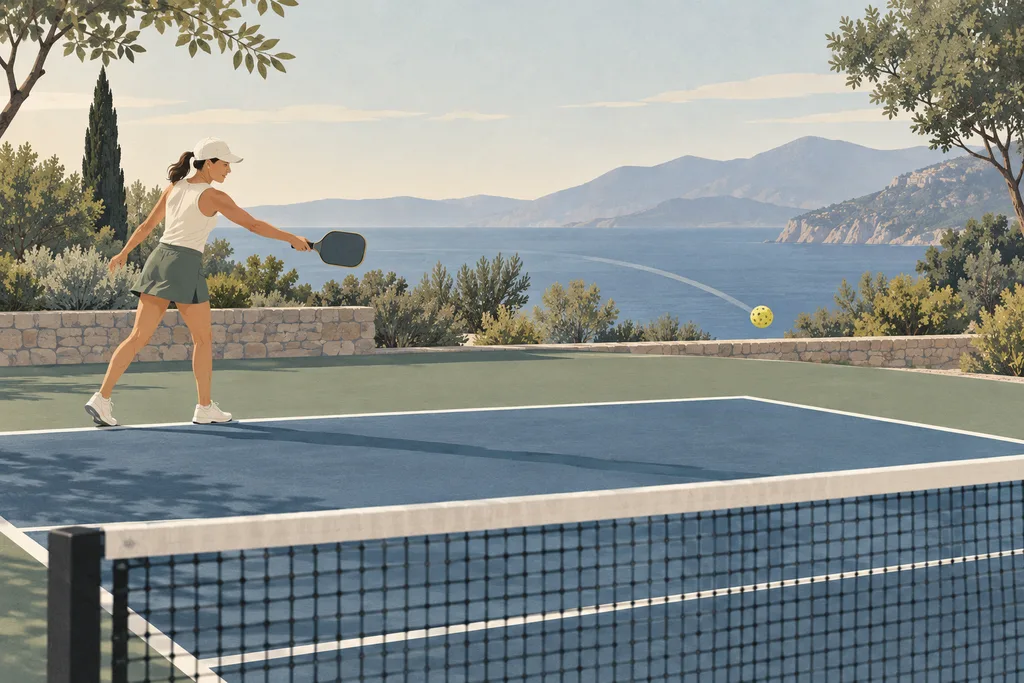
This piece, "Nailing the Third-Shot Drop: A Step-by-Step Method," breaks into clear blocks — follow them in order. You'll know how to build a steady drop from the back of the court. The structure follows this sequence: the guiding idea in plain terms, the method, and how to check your results. It's written for French-speaking pickleball players — beginners, club or tournament players, coming from tennis, padel or badminton — who want to play better doubles.
The Guiding Idea in Plain Terms
Start from this idea — on the return of serve, both players starting from the back of the court keeps the opponent from "hammering" you at the net and puts less pressure on the partner who sends the ball back.
Here's the core rule to keep in mind: the "I" formation on the serve is there to confuse the opponent and cover as many angles as possible.
Start from this idea — the dink is a conversation at the net, a game of cat and mouse where the first to slip gets punished: the FFT calls it a technical and psychological war of attrition. Use that line as your reference from here on.
The Method
Read these steps — then practice them — in order:
- The FFT advises working the serve to the opponent's body and adapting your volley to the type of serve you receive.
- While your partner hits the drop, move forward without rushing: stay at the same depth as your partner, roughly shoulder to shoulder, and don't take the non-volley line until the drop has crossed the net.
- In doubles, communication takes balance — knowing when to talk to your partner, when to stay quiet and when to encourage.
- After the third shot, one word is enough — "Go" (good shot, move up to the kitchen) or "Back" (bad shot, stay or drop back), to set the timing of your movements.
- A small split step after every move, knees slightly bent and weight balanced, keeps you ready to react fast to the next ball.
How to Check Your Results
Run your situation through this checklist:
- Reading the third shot — a good drop lands near the opponents' feet, while a ball floating at chest height is a bad drop. Your partner has to watch the shot to decide whether to move up.
- For the doubles serve, the FFT recommends aiming for about 80% of first balls in play, favoring the target zone over power.
- In a ten-minute simulation of pickleball (singles), the average heart rate measured was 130.89 beats per minute across twenty adults.
Which Trajectory Should You Aim For?
The practice to remember goes like this — after a wide dink, the player on the cross-court side has to move toward the center line with the inside foot and stay ready to take balls down the middle. Otherwise there's a gap to exploit. Test it at your own pace before you judge.
The applicable provisions state: the non-volley zone extends 2.13 m on each side of the net. You can't volley in it (takeoff and landing included), but you can step in to play a ball after it bounces.
The applicable provisions state: the serve is made below the hip, diagonally, toward the opposite service zone, with the server standing behind the baseline.
How Do You Measure Your Consistency?
The applicable provisions state — the non-volley zone (the kitchen) extends 2.13 m on either side of the net: you don't volley in it, including on the takeoff or landing of the stroke, but you can step in to play a ball after it bounces.
The applicable provisions state: in doubles, each team has two servers before losing the serve, except on the first service sequence of the game, when the starting team gets only one chance.
The Substance of the Text
Fix these points in your memory:
- In doubles, communication takes balance.
- After the third shot, one word is enough.
- The non-volley zone extends 2.13 m on each side of the net.
Last Word: The Essentials
The reading path ran through the guiding idea in plain terms, the method and how to check your results — come back to any of it whenever you like. Jot your own observations in the margin — they're worth as much as these pages.
Go further
- Pickleball Doubles Positioning: The Complete Guide — Positioning and partner coordination on the court. You'll cover the rules of the mental game, the written resources and how to start the section.
- Moving Up to the Net in Doubles: When and How to Do It With Your Partner — You'll know how to move up to the net in sync with your partner. The plan: the guiding idea in plain terms and the action plan.
- From Tennis or Padel to Pickleball: Adapting Your Movement in Doubles — You'll know which habits from your original sport to keep and which to drop. The reading then turns to what you have to sort out in practice.
- Non-Volley Zone: Common Faults and Habits to Build — You'll know how to avoid foot faults and choose between a volley and a bounce. This page walks through, in order, why you should start here.
Reference material
- Comment former une bonne équipe de double ? —
- Les 7 coups capitaux du pickleball —
- Third Shot Drop Positioning Guide — Article dated 09/12/2025 (updated 04/23/2026) on positioning around the third-shot drop. Source reviewed on 2026-10-15.
- 8 pickleball doubles strategy fixes to become a real threat —
- Validity and Reliability of Wearable Technology Devices during Simulated Pickleball Game Play — Validity study of smartwatches: heart rate was reliable during a simulated singles game, while energy expenditure estimates were not. Source reviewed on 2026-10-13.
- 5 pickleball court coverage mistakes in doubles — Five court-coverage mistakes in doubles and how to fix them. Source reviewed on 2026-10-15.
- Les règles du pickleball —
Rules change from one season to the next: always check the current version with the Fédération française de tennis before a competition.
Pickleball is hard on the knees, shoulders and wrists: this content doesn't replace the advice of a doctor or physical therapist.