From Tennis or Padel to Pickleball: Adapting Your Movement in Doubles
Posted Oct 21, 2026 Edited Oct 21, 2026 4 minutes to read
An article by the Jouer à Deux editorial team.
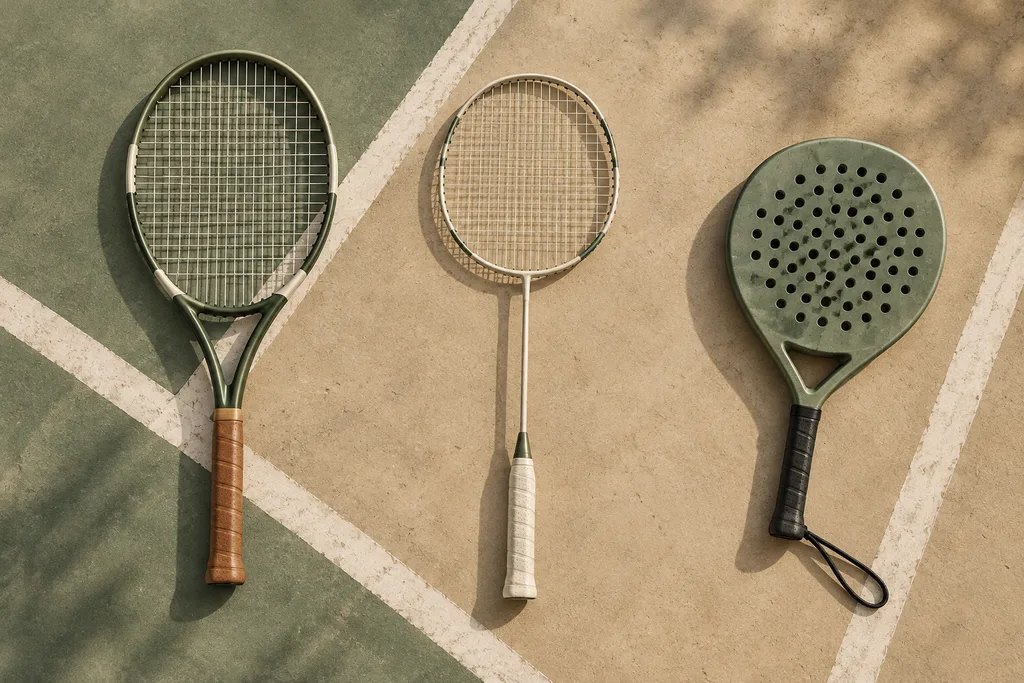
Welcome to "From Tennis or Padel to Pickleball: Adapting Your Movement in Doubles" — read it at your own pace, pencil in hand. You'll know which habits from your original sport to keep and which to drop. The reading steps are these: what you have to sort out in practice, the decision points without detours, and the summary in columns. This text was written for you if this describes you: French-speaking pickleball players — beginners, club or tournament players, coming from tennis, padel or badminton — who want to play better doubles.
What You Have to Sort Out in Practice
Start from this guiding idea — the dink is a dialogue at the net, a cat-and-mouse game where the first to slip up pays for it: the FFT calls it a technical and psychological war of attrition. Make that line your marker from here on.
The guiding idea goes like this: on the return of serve, both players starting from the back of the court avoids getting "peppered" at the net by the opponent and puts less pressure on the partner who sends the ball back.
Keep this principle in mind first: the drop is a very short shot that lands in the kitchen; it takes a lot of hand skill and touch to neutralize the opponent. Come back to this idea whenever doubt creeps in.
The Decision Points, No Detours
Your choices will rest on these benchmarks:
- At the net, a player should consider that a ball coming down along their sideline is their responsibility.
- Move as a block with your partner — both players shift together toward the ball to close the gaps created by their own shot, otherwise the opponent exploits the open court.
- Stacking means putting both players on the same side before the point, then having them move to their preferred side once the ball is in play, so each stays on the side that suits them (dominant hand, strength).
- When one player poaches, the partner must make a "switch" to cover the empty zone.
- Don't move forward without having played a shot that earns the move: a good drop earns you the right to move up, a poor one doesn't.
The Summary in Columns
Take the time to read each of these points:
- To cover your sideline, it can help to stand closer to the line than feels comfortable, trusting your partner to handle the middle of the court.
- Moving sideways in small shuffle steps rather than running forward lets you change direction instantly without losing time.
- A small split step after each move, knees slightly bent and weight balanced, keeps you ready to react fast to the next ball.
- Before the match, it helps to talk with your partner about favorite shots (drops or drives) and comfort moving up to the net, and to encourage the move up with a phrase like "nice drop, come up with me."
- In a dink rally, the first player who misses their dink or plays it sloppily is punished right away: each side tries to keep the other from volleying until an opening appears.
- After the third shot, one word is enough — "Go" (good shot, we move toward the kitchen) or "Back" (bad shot, we stay or retreat), to sync the timing of your movement.
Common Pitfalls
Watch out for these frequent traps:
- Stacking becomes counterproductive when the quality of the serve or return drops, communication between partners breaks down, or serve placement gets inconsistent.
- If your partner's drop is weak or too high, don't rush forward: it's better to stay put and get ready to defend from the back than to get caught in the transition zone, open to angles.
Notes to Close the Reading
Fix these points in your memory:
- Move as a block with your partner.
- After the third shot, one word is enough.
At the End of the Reading
Go back to any of these sections if you need to — what you have to sort out in practice, the decision points without detours, the summary in columns and the common pitfalls. Return to the sections that seemed unclear before you move on to something else.
Go further
- Third Shot: Drop or Power Forehand? — You'll learn how to pick the right third shot for the situation. This page walks through, in order, what you need to weigh in practice.
- Pickleball Doubles Positioning: The Complete Guide — Positioning and partner coordination on the court. You'll cover the rules of the mental game, the written resources and how to start the section.
- Nailing the Third Shot Drop: A Step-by-Step Method — You'll learn to build a reliable drop from the baseline. The article moves from the core idea in plain terms to the step-by-step method.
- Moving Up to the Net in Doubles: When and How to Do It With Your Partner — You'll know how to move up to the net in sync with your partner. The plan: the guiding idea in plain terms and the action plan.
Reference material
- Les 7 coups capitaux du pickleball —
- Comment former une bonne équipe de double ? —
- 8 pickleball doubles strategy fixes to become a real threat —
- Pickleball Stacking for beginners: full vs half stack — Trade press article on stacking in doubles. Source reviewed on 2026-10-13.
- How to position yourself in pickleball doubles: zone map — Doubles positioning guide by zone: non-volley line, transition zone, baseline, middle. Source reviewed on 2026-10-15.
- No Man's Land (How to avoid no man's land in pickleball: transition zone tips) — Trade press article on the transition zone. Source reviewed on 2026-10-13.
- Kitchen Line Strategy: Move Together or Stagger? — Article from 07/07/2025 on coordinated movement up to the non-volley line. Source reviewed on 2026-10-15.
Rules change from one season to the next: always check the current version with the Fédération française de tennis before a competition.
Pickleball puts stress on knees, shoulders and wrists: this content is no substitute for the advice of a doctor or physical therapist.