Net Volleys: Defensive Responses and Counterattacks
Posted Oct 21, 2026 Edited Oct 21, 2026 4 minutes to read
An article from the Jouer à Deux editorial team.
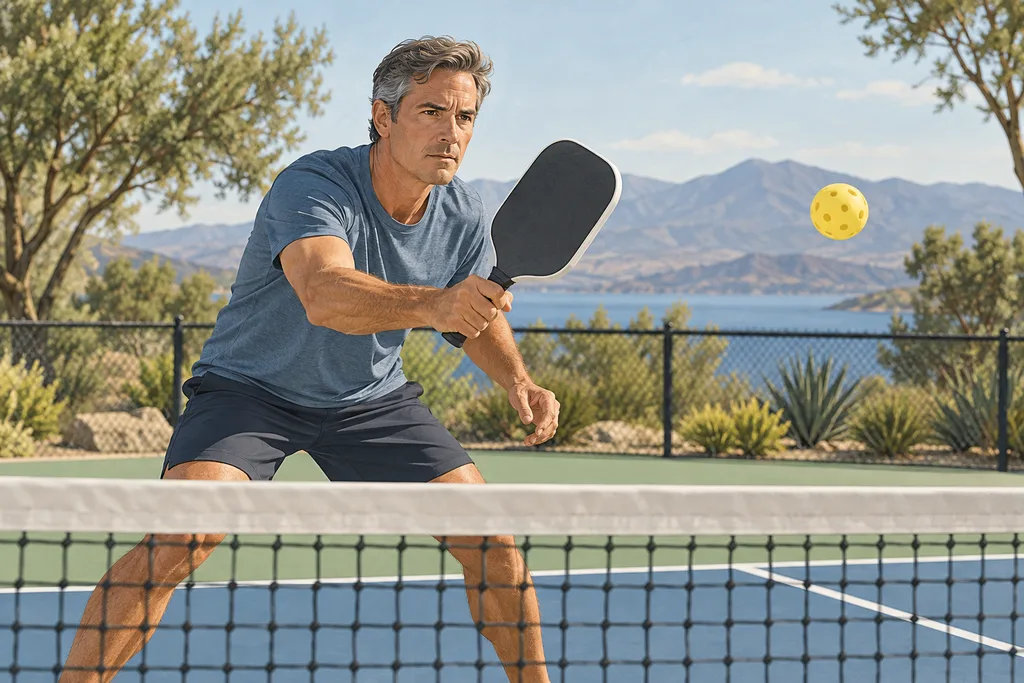
Let's go through “Net Volleys: Defensive Responses and Counterattacks” with care — note what applies to you as you read. You'll know when to block, soften, or speed up a volley. The piece covers a close look at where things stand, the technical explanation, and what to base your choice on. It's aimed at one audience: French-speaking pickleball players — beginners, club and tournament players, people coming from tennis, padel, or badminton — who want to play better doubles.
A Close Look at Where Things Stand
Use this figure as a benchmark — during a ten-minute simulated pickleball game (singles), average heart rate was 130.89 beats per minute across twenty adults.
Start with this idea — the drop (a soft shot) is a very short shot that lands in the kitchen. It takes a lot of hand skill and touch to neutralize your opponent.
Here's the core rule to keep in mind: when choosing a doubles partner, the FFT suggests looking first for chemistry of character rather than compatible games — a united but less talented team can beat a divided team of stars.
The foundation of the method comes down to this — move as one with your partner. Both players shift toward the ball to close the gaps their own shot creates. Otherwise, your opponent exploits the open court. Stop here long enough to memorize it.
The Technical Explanation
Let's set down this starting point — the dink is a conversation at the net, a game of cat and mouse where the first to slip gets punished. The FFT calls it a technical and psychological war of attrition.
Start with this idea — to move up after the drop, you have to decide to advance before the ball is even struck. That avoids hesitating once the shot is made. Jot this principle down in the margin of your notes.
Here's the core rule to keep in mind — the third shot is the pivotal moment of the rally. The player chooses between a drop (a short, soft shot) and a drive (a powerful shot from the baseline), depending on where the opponents are and how good the return was. Stop here long enough to memorize it.
What to Base Your Choice On
Check your needs against the list of criteria below:
- On a pickleball volley, there's no shoulder turn — barely a slight rotation — because the ball comes back so fast that not a fraction of a second can be wasted. That's a difference from tennis.
- On the return of serve, starting with both players back at the baseline keeps you from being “peppered” at the net by the opponents. It also puts less pressure on the partner who sends the ball back.
- When one player poaches, their partner has to “switch” to cover the empty zone.
- In a dink rally, the first player who misses a dink or plays it sloppily is punished right away — each side tries to stop the other from volleying until an opening appears.
- The “I” formation on serve is used to confuse the opponents and cover as many angles as possible.
When to Block Instead of Hit
One recommended habit is worth building: before the match, talk with your partner about your favorite shots (drops or drives) and how comfortable you are moving up to the net. Encourage the move with a phrase like “nice drop, come up with me.”
Work this move into your routine — when you advance after the drop, watch your opponent's ball rather than their paddle. It buys you extra decision time to choose between a reset (low ball) and an attack (high ball). Add this practice to your personal list.
Work this move into your routine: to move up to the non-volley line together, one article suggests keeping about eight feet between partners, like an “invisible rope,” to avoid gaps. It also suggests doing the split step together when the opponents are about to hit.
How to Take Back the Initiative
One recommended habit is worth building — a single-word call is enough to coordinate the move up after the third shot: “Go” after a good drop so your partner advances to the non-volley line, “Back” if the shot is weak and you need to retreat. Reread this advice when you're not rushed.
Notes at the End of the Read
This summary fits in a few bullets:
- Move as one with your partner.
- The third shot is the pivotal moment of the rally.
By the End of the Read
You've now been through a close look at where things stand, the technical explanation, and what to base your choice on. Keep this text open next to you at your next practice session.
Go further
- Pickleball Doubles Positioning: The Complete Guide — Positioning and partner coordination on the court. You'll cover the rules of the mental game, the written resources and how to start the section.
- Partner Positioning: Where to Stand at Each Phase of the Point — You'll know how to position yourself with your partner on the serve, the return and at the net. The article walks through how it works in detail.
- Third Shot: Drop or Power Forehand? — You'll learn how to pick the right third shot for the situation. This page walks through, in order, what you need to weigh in practice.
- The Doubles Dink: Technical Basics and Tactical Goals — You'll know how to play a controlled dink and understand what it aims to achieve. The article covers how it works in detail and the first moves.
Reference material
- Validity and Reliability of Wearable Technology Devices during Simulated Pickleball Game Play — Validity study of smartwatches: heart rate was reliable during a simulated singles game, while energy expenditure estimates were not. Checked on 2026-10-13.
- Les 7 coups capitaux du pickleball —
- Comment former une bonne équipe de double ? —
- 8 pickleball doubles strategy fixes to become a real threat —
- How to move to the kitchen line after the third shot drop — Trade press article on moving up to the net after the third shot. Checked on 2026-10-13.
- How to position yourself in pickleball doubles: zone map — Guide to doubles positioning by zone: non-volley line, transition zone, baseline, middle. Checked on 2026-10-15.
- Kitchen Line Strategy: Move Together or Stagger? — Article dated 07/07/2025 on coordinated moves to the non-volley line. Checked on 2026-10-15.
Rules change from one season to the next — always check the current version with the Fédération française de tennis before a competition.
Pickleball is hard on knees, shoulders, and wrists — this content doesn't replace the advice of a doctor or physical therapist.